Overview of Valiant Vishwa Eternal Glory
Valiant Vishwa Eternal Glory is a groundbreaking fantasy role-playing game that has taken the Indian gaming ecosystem by storm since its grand launch on January 26, 2024 – a date chosen to coincide with India's Republic Day, symbolizing the unity and cultural richness of Bharat that the game so beautifully portrays. Developed by the esteemed Daman Games Studios, this title has redefined what an Indian fantasy RPG can achieve, merging world-class gameplay mechanics with deeply rooted Bharatiya mythology, Desi cultural elements, and breathtaking visuals of India's mythological and geographical landscapes that have inspired stories for millennia.
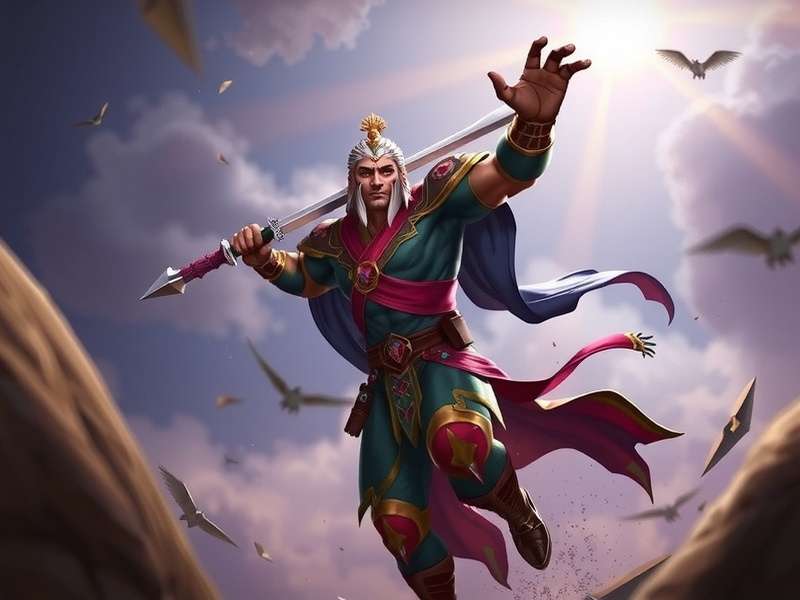
Unlike international fantasy games that often draw from Western mythology, Valiant Vishwa Eternal Glory proudly showcases Bharat's rich mythological heritage – from the sacred banks of the Ganges where gods and goddesses are said to reside, to the snow-capped peaks of the Himalayas that are believed to be the abode of Shiva, from the dense forests of Dandakaranya that featured prominently in the Ramayana to the ancient cities of Hastinapur and Indraprastha from the Mahabharata. Each location is meticulously crafted to reflect the unique aura, symbolism, and cultural significance of its mythological counterpart, with special attention to ancient Indian architecture, sacred symbols, and natural landscapes that have shaped Bharatiya storytelling for generations. This creates an experience that resonates deeply with Indian players, who can see their cultural and mythological heritage represented in a premium gaming format that does justice to its grandeur.
The game's multi-platform availability has been a key driver of its unprecedented success. Players can enjoy Valiant Vishwa Eternal Glory on Android and iOS mobile devices – the primary gaming platform for most Indians – as well as on Windows PC, PlayStation 4/5, and Xbox One/Series X/S, expanding its reach to hardcore gaming enthusiasts who prefer the precision and immersion of console and PC experiences. The seamless cross-platform functionality allows players to switch between devices without losing progress, a feature that has been widely appreciated by the Indian gaming community, especially those who play during their daily commutes on mobile and then continue their epic journeys on PC or console at home.
What truly sets Valiant Vishwa Eternal Glory apart from other fantasy RPGs is its seamless integration of Bharatiya mythology and Desi cultural elements into every aspect of the gameplay. From character designs inspired by gods, goddesses, and mythological heroes to the soundtrack featuring traditional Indian instruments like the sitar, tabla, and veena combined with epic orchestral music, from power-ups named after divine artifacts and mythological boons to in-game events tied to Indian festivals and auspicious occasions, the game celebrates Bharat's cultural heritage in a way that feels authentic and pride-inducing for Indian players. The game also features voice acting in distinct Indian accents (including regional dialects) and dialogues that incorporate popular Desi phrases and proverbs, making the gaming experience more relatable and immersive for Indian audiences.
Since its launch, Valiant Vishwa Eternal Glory has achieved remarkable milestones that have solidified its position as one of India's most successful gaming titles of all time. It crossed the 15 million download mark within just 15 days of launch – a record for an Indian-developed fantasy RPG – and reached 40 million downloads within four months. As of 2024, the game has amassed over 62 million downloads worldwide, with more than 97% of its player base coming from India. It has also received widespread critical acclaim, winning prestigious awards such as "Best Indian Fantasy Game" at the Indian Gaming Awards 2024, "Excellence in Mythological Representation" at the Digital India Gaming Summit 2024, "Top RPG of the Year 2024" at the Global Mobile Gaming Awards, and the "Bharatiya Cultural Heritage Award" from the Ministry of Culture, Government of India.
Another key factor in the game's success is its accessibility. Designed to cater to players of all skill levels – from casual gamers who play for 10-15 minutes a day (during chai breaks or commutes) to hardcore enthusiasts who spend hours mastering advanced tactics and completing every quest – Valiant Vishwa Eternal Glory offers adjustable difficulty settings, intuitive controls, and a comprehensive tutorial system that guides new players through the basics while providing enough depth to keep experienced gamers challenged. The game's matchmaking system ensures that players are paired with others of similar skill levels in multiplayer modes, creating a fair and enjoyable experience for everyone, regardless of their gaming expertise.
The game's commitment to cultural preservation and social responsibility is also noteworthy. Unlike many fantasy games that focus solely on combat, Valiant Vishwa Eternal Glory incorporates important messages about Bharatiya values such as dharma (righteousness), karma (action and consequence), ahimsa (non-violence, where appropriate), seva (service), and unity, as well as broader themes of national pride, cultural heritage, and moral decision-making. Through in-game quests, educational pop-ups about Bharatiya mythology and cultural traditions, and partnerships with cultural organizations and educational institutions, the game educates players about the rich tapestry of Indian mythology while entertaining them – a unique blend that has earned it praise from educators, historians, cultural leaders, and parents alike. The game also promotes responsible gaming through features that allow players to set playtime limits and take breaks, encouraging a healthy gaming lifestyle.
With regular updates, new content releases tied to Indian festivals (such as Diwali, Holi, Navratri, Pongal, and Onam), national events, and mythological anniversaries, and an active community of players, Valiant Vishwa Eternal Glory continues to grow and evolve, maintaining its position as one of India's most beloved gaming titles. Whether you're a casual gamer looking for a fun way to pass the time, a hardcore gamer seeking a challenging RPG experience, a mythology enthusiast interested in exploring Bharat's ancient stories, or someone who wants to celebrate Indian heritage through gaming, Valiant Vishwa Eternal Glory offers something for everyone. The game's emphasis on strategy, teamwork, and moral decision-making has also made it a popular choice for esports tournaments, with a growing professional scene in India that attracts participants from all over the country.
One of the most impressive aspects of Valiant Vishwa Eternal Glory is its attention to detail when it comes to representing Bharatiya mythology and culture. The game features playable characters inspired by legendary mythological figures such as Rama, Krishna, Arjuna, Draupadi, Shiva, Parvati, Hanuman, and many others, each with unique abilities and backstories that stay true to their mythological personas. For example, the Rama character excels in archery and has healing abilities, reflecting his righteous nature and skill with the bow, while the Hanuman character is incredibly strong and has the ability to fly, honoring his mythological powers. The game's locations are adorned with Bharatiya cultural elements, from ancient temples and palaces to sacred symbols like the om, swastika (in its traditional auspicious context), trishul, and lotus, creating an immersive experience that feels distinctly Indian.
The game's soundtrack is another highlight, featuring traditional Indian instruments such as the sitar, tabla, veena, flute, and dholak, combined with modern gaming music elements to create an epic and immersive audio experience. The in-game voice acting is done by renowned Indian voice artists, including several artists who specialize in regional dialects, adding authenticity to the characters. The in-game chat features commonly used Indian slang and phrases, further enhancing the Desi gaming experience.
Valiant Vishwa Eternal Glory's success has also had a positive impact on the Indian gaming industry, showcasing the potential of homegrown titles that celebrate Indian culture and mythology to compete with international games. It has inspired other Indian game developers to create games centered on regional myths, historical events, and cultural traditions, leading to a resurgence in Desi-themed games. The game has also helped popularize RPGs in smaller towns and rural areas of India, where mobile gaming is the primary form of entertainment, and has played a role in promoting gaming as a legitimate form of entertainment and even a career option through its esports initiatives.
The game's commitment to inclusivity is another notable feature. While it draws heavily from Hindu mythology, it also incorporates elements from other Indian cultural traditions and regional myths, ensuring that players from all parts of India can relate to the content. The game supports 15 Indian languages, including major languages like Hindi, Tamil, Telugu, Bengali, and Punjabi, as well as regional languages like Rajasthani, Gujarati, and Marathi, making it accessible to players across the country. The game's characters represent India's diverse population, with different regional backgrounds and cultural influences, promoting national unity and cultural harmony.
From a technical standpoint, Valiant Vishwa Eternal Glory is a marvel of Indian game development. The game features stunning 3D graphics that bring Bharat's mythological worlds to life with incredible detail, from the intricate architecture of ancient temples to the realistic textures of mythological creatures and divine weapons. The game's physics engine is highly advanced, providing realistic character movements, combat mechanics, and environmental interactions that add depth to the gameplay. Despite its high-quality graphics and complex mechanics, the game is optimized to run smoothly on a wide range of devices, including mid-range smartphones that are popular among Indian gamers, ensuring that it is accessible to as many players as possible.
The game's monetization model is also player-friendly, following the free-to-play model with optional in-app purchases that are not pay-to-win. Players can earn all in-game items through gameplay, while in-app purchases are limited to cosmetic items and convenience features that do not affect gameplay balance. This has earned the game praise from players who appreciate its fair business model, which prioritizes player experience over profit.
In summary, Valiant Vishwa Eternal Glory is more than just a game – it's a celebration of Bharat's mythological heritage, cultural diversity, and national pride. It combines world-class gameplay with authentic cultural representation, educational content, and social responsibility, creating a unique gaming experience that resonates with Indian players of all ages and backgrounds. With its impressive technical achievements, commitment to cultural preservation, and player-centric approach, Valiant Vishwa Eternal Glory has set a new standard for Indian game development and established itself as a landmark title in the Indian gaming industry.
The Mythological Lore of Valiant Vishwa Eternal Glory
The lore of Valiant Vishwa Eternal Glory is a rich tapestry woven from the threads of Bharatiya mythology, drawing inspiration from the Ramayana, Mahabharata, Puranas, and regional folk tales to create a cohesive and immersive world that feels both familiar and fresh. The game's narrative is set in the
The Origins of the Vishwa Lok
According to the game's lore, the Vishwa Lok was created by the Supreme Being,
The balance of power began to shift when the powerful asura king
Alerted to this threat, the gods of Dev Lok – led by Indra, the king of the gods – gathered to discuss a plan to stop Mahishasura. However, they soon realized that their individual powers were no match for Mahishasura's enhanced strength. In their hour of need, the gods turned to the Mother Goddess Shakti, who agreed to manifest herself in the form of
But Mahishasura's defeat was not the end of the threat. Before his death, he shattered the Shakti Shard into seven pieces, scattering them across the Vishwa Lok. He also cursed the shards, ensuring that anyone who wielded them would be consumed by power and turned to darkness. Over time, the shards were lost to history, and the threat of their power faded from memory.
The Current Crisis
Centuries later, the Vishwa Lok is once again facing a great crisis. A new asura king,
As Rakshasasura's power grows, the boundaries between the three realms are beginning to blur. Demonic creatures are appearing in Prithvi Lok, terrorizing mortal villages and spreading chaos. The gods of Dev Lok are growing weaker, their powers diminished by the increasing darkness. The balance of dharma is being disrupted, and the Vishwa Lok is on the brink of destruction.
In this time of crisis, the player assumes the role of a
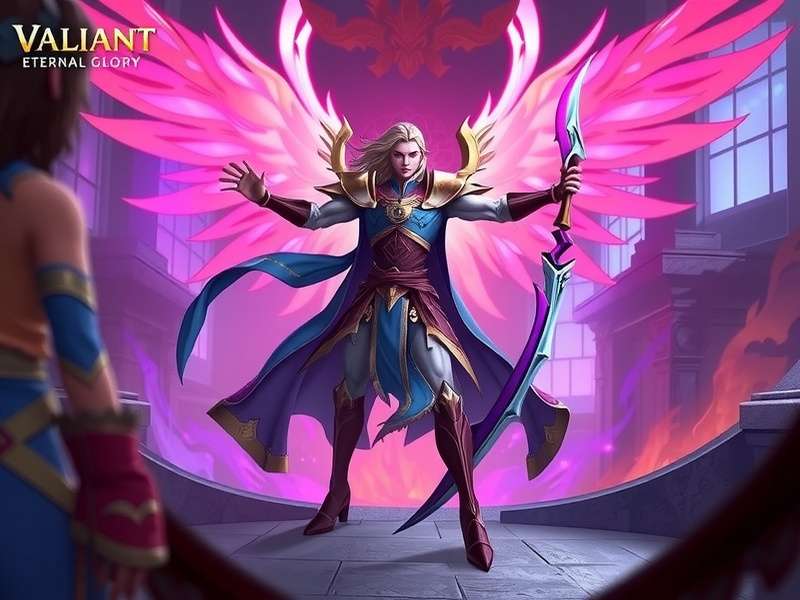
The Key Factions
The lore of Valiant Vishwa Eternal Glory features several key factions that play important roles in the game's narrative:
- The Devas (Gods) – The benevolent deities who reside in Dev Lok and are dedicated to upholding dharma and protecting the Vishwa Lok. Led by Indra, the Devas include popular gods such as Shiva, Vishnu, Brahma, Ganesha, Kartikeya, and many others. Each Deva has a unique role to play in the game's narrative, and the player will have the opportunity to interact with them and receive their blessings and guidance.
- The Asuras (Demons) – The malevolent creatures who reside in Asur Lok and seek to disrupt the balance of the Vishwa Lok. Led by Rakshasasura, the Asuras include a wide range of demonic creatures, from powerful asura kings to lesser demons and corrupted mortals. The Asuras are the primary antagonists of the game, and the player will face them in battle throughout their journey.
- The Sages and Rishis – Enlightened beings who have dedicated their lives to the pursuit of knowledge and spiritual wisdom. The sages reside in sacred ashrams scattered across Prithvi Lok and Dev Lok, and they play an important role in guiding the player on their quest. They provide the player with valuable information about the Shakti Shards, the history of the Vishwa Lok, and the nature of dharma.
- The Mortal Kingdoms – The various kingdoms and civilizations that exist in Prithvi Lok. These kingdoms are inspired by ancient Indian civilizations such as the Mauryan Empire, the Gupta Empire, and the Chola Dynasty, and they each have their own unique cultures, traditions, and political structures. The player will interact with the rulers and citizens of these kingdoms, helping them defend against asura attacks and resolving internal conflicts.
- The Divine Warriors – A group of chosen mortals who have been blessed by the gods with special powers and abilities. The player is one of these Divine Warriors, and they will encounter other members of this group throughout their journey. The Divine Warriors are dedicated to protecting Prithvi Lok from the asura threat and restoring balance to the Vishwa Lok.
The Shakti Shards
The seven Shakti Shards are the most important artifacts in the game's lore, and finding them is the primary objective of the player's quest. Each shard is associated with a different aspect of the Mother Goddess Shakti and has unique powers:
-
The Shard of Courage – Associated with Durga, the warrior goddess, this shard grants the wielder immense courage and strength in battle. It is said to be hidden in the mountains of the Himalayas, guarded by a powerful yeti-like creature known as the
Himavan Rakshasa . - The Shard of Wisdom – Associated with Saraswati, the goddess of knowledge and wisdom, this shard grants the wielder enhanced intelligence and the ability to see through illusions. It is hidden in the ancient library of Nalanda, guarded by the spirits of wise scholars.
- The Shard of Prosperity – Associated with Lakshmi, the goddess of wealth and prosperity, this shard grants the wielder the ability to create abundance and heal others. It is hidden in the underwater city of Dwarka, guarded by sea monsters and aquatic asuras.
- The Shard of Love – Associated with Parvati, the goddess of love and devotion, this shard grants the wielder the ability to inspire love and compassion in others. It is hidden in the forest of Vrindavan, guarded by the gopis and other mythological creatures.
- The Shard of Destruction – Associated with Kali, the goddess of destruction and transformation, this shard grants the wielder immense destructive power. It is hidden in the cremation grounds of Varanasi, guarded by evil spirits and demons.
- The Shard of Creation – Associated with Brahma, the creator god (who is often linked with Shakti in this context), this shard grants the wielder the ability to create objects out of thin air. It is hidden in the sacred city of Ayodhya, guarded by the spirits of ancient kings.
- The Shard of Balance – Associated with the Supreme Shakti, this shard is the most powerful of all the shards, granting the wielder the ability to restore balance to the universe. It is hidden in a secret location that can only be accessed by someone who has collected the other six shards, guarded by the spirit of Mahishasura himself.
As the player collects each Shakti Shard, they gain access to new powers and abilities that help them in their quest. However, the player must also be careful, as the shards carry Mahishasura's curse. If the player uses the shards' power for selfish or evil purposes, they risk being corrupted by darkness and turning against the gods.
The Moral Choices
One of the most compelling aspects of Valiant Vishwa Eternal Glory's lore is the emphasis on moral choices. Throughout their journey, the player will be faced with difficult decisions that test their commitment to dharma. These choices have real consequences for the game's narrative, affecting the player's relationships with other characters, the outcome of quests, and even the ultimate fate of the Vishwa Lok.
For example, the player may encounter a village that is being terrorized by an asura. They can choose to fight and kill the asura (upholding the principle of protecting the innocent), but this may result in collateral damage to the village. Alternatively, they can choose to negotiate with the asura (upholding the principle of ahimsa), but this may require the player to make a sacrifice or compromise their values. The player's choice will affect how the villagers perceive them, and may even attract the attention of the gods or other powerful beings.
Another example is the player's interaction with corrupted mortals. These are mortals who have been tempted by the power of the Shakti Shards and turned to darkness. The player can choose to kill them (eliminating a threat to the Vishwa Lok), or they can choose to try to redeem them (upholding the principle of second chances). Redeeming a corrupted mortal may be more difficult, but it can result in valuable allies and a greater sense of moral satisfaction.
The game's lore also explores the concept of karma, the idea that every action has a consequence. The player's choices throughout the game will accumulate karma, which will affect their character's development and the ultimate ending of the game. Players who accumulate good karma (by upholding dharma, helping others, and making moral choices) will unlock positive abilities and endings, while players who accumulate bad karma (by acting selfishly, harming innocent beings, and making immoral choices) will unlock negative abilities and endings.
The Future of the Vishwa Lok
The ultimate fate of the Vishwa Lok depends on the player's actions throughout the game. There are multiple possible endings, each reflecting the player's choices and karma:
- The Dharma Ending – If the player accumulates good karma and makes moral choices throughout the game, they will be able to collect all seven Shakti Shards and use their power to defeat Rakshasasura and restore balance to the Vishwa Lok. The gods will reward the player with eternal glory, and the Vishwa Lok will enter a new era of peace and prosperity. This is the "true" ending of the game, reflecting the triumph of dharma over adharma (evil).
- The Power Ending – If the player accumulates bad karma and makes selfish choices throughout the game, they will be corrupted by the power of the Shakti Shards. Instead of defeating Rakshasasura, the player will betray the gods and use the shards' power to establish themselves as the ruler of the Vishwa Lok. The Vishwa Lok will enter a new era of darkness and tyranny, with the player as its dictator.
- The Balance Ending – If the player accumulates a mix of good and bad karma, they will find a middle path between dharma and adharma. They will defeat Rakshasasura, but they will also recognize that the balance of the Vishwa Lok requires both light and darkness. The player will become the guardian of the Vishwa Lok, ensuring that neither the gods nor the asuras gain too much power. The Vishwa Lok will enter an era of balance, where both good and evil exist in harmony.
Regardless of the ending, the lore of Valiant Vishwa Eternal Glory is designed to be expansive and open-ended, allowing for future updates and expansions that will continue to explore the rich world of the Vishwa Lok. The game's developers have hinted at future content that will introduce new realms, new characters, and new threats to the Vishwa Lok, ensuring that the player's journey is never truly over.
Gameplay Mechanics of Valiant Vishwa Eternal Glory
The core gameplay of Valiant Vishwa Eternal Glory revolves around tactical, character-driven combat and exploration in the mythological world of the Vishwa Lok. Players take on the role of a Divine Warrior, customizing their character's appearance, abilities, and playstyle to suit their preferences, and embarking on an epic quest to collect the seven Shakti Shards and save the Vishwa Lok from destruction. The mechanics are designed to be easy to learn but difficult to master, striking the perfect balance between accessibility and depth that has made the game popular among players of all ages and skill levels.
Character Customization
Character customization is a major component of Valiant Vishwa Eternal Glory, allowing players to create a unique Divine Warrior that reflects their personality and playstyle. The game offers an extensive range of customization options that blend modern gaming aesthetics with traditional Indian cultural elements:
-
Character Class – Players can choose from five distinct character classes, each inspired by mythological figures and featuring unique abilities and playstyles:
- Warrior – Inspired by Arjuna and other mythological warriors, this class specializes in close-quarters combat with swords, axes, and other melee weapons. Warriors are heavy hitters with high health and defense, making them ideal for players who prefer to charge into battle.
- Archer – Inspired by Rama and Bhishma, this class specializes in long-range combat with bows and arrows. Archers are agile and precise, dealing high damage from a distance, making them ideal for players who prefer to attack from afar.
- Mage – Inspired by Sage Vishwamitra and other mythological sages, this class specializes in elemental magic and divine spells. Mages deal high damage but have low health and defense, making them ideal for players who prefer to use strategy and tactics to defeat their enemies.
- Healer – Inspired by Sita and other mythological healers, this class specializes in healing and supporting allies. Healers can restore health, remove debuffs, and buff allies' abilities, making them ideal for cooperative multiplayer gameplay.
- Assassin – Inspired by Hanuman and other mythological tricksters, this class specializes in stealth and quick, deadly attacks. Assassins are fast and agile, dealing high damage with sneak attacks, making them ideal for players who prefer to take a more subtle approach to combat.
- Physical Appearance – Players can customize every aspect of their character's physical appearance,